The Valley of Grace
━ the valley of grace · western cape · south africa · since 1738
Come and experience one of the greatest human stories ever told.
Set in a protected area in the Cape Floral Kingdom that will take your breath away.
━ Why valley of grace
Come for the scenery; stay for the transformation.
The Valley of Grace isn't your usual eco-tourism destination, although we offer that too. We specialise in deep transformation as lived experience, both personal and collective.
In a time of accelerating ecological and social change, the future depends on our ability to renew relationships between people, place, and the living systems that sustain life.
The Valley of Grace has been living and documenting deep transformations since 1738. We think we've learned a thing or two.
━ The story
Our valley has been telling the same story for 300 years. It might be your story too.
Every community on earth has moved through these four chapters. Most moved through them too quickly to notice. The Valley of Grace, where everything happens at a slower pace, took the time to write everything down and meticulously preserve the artifacts.
Now we're ready to tell the story.
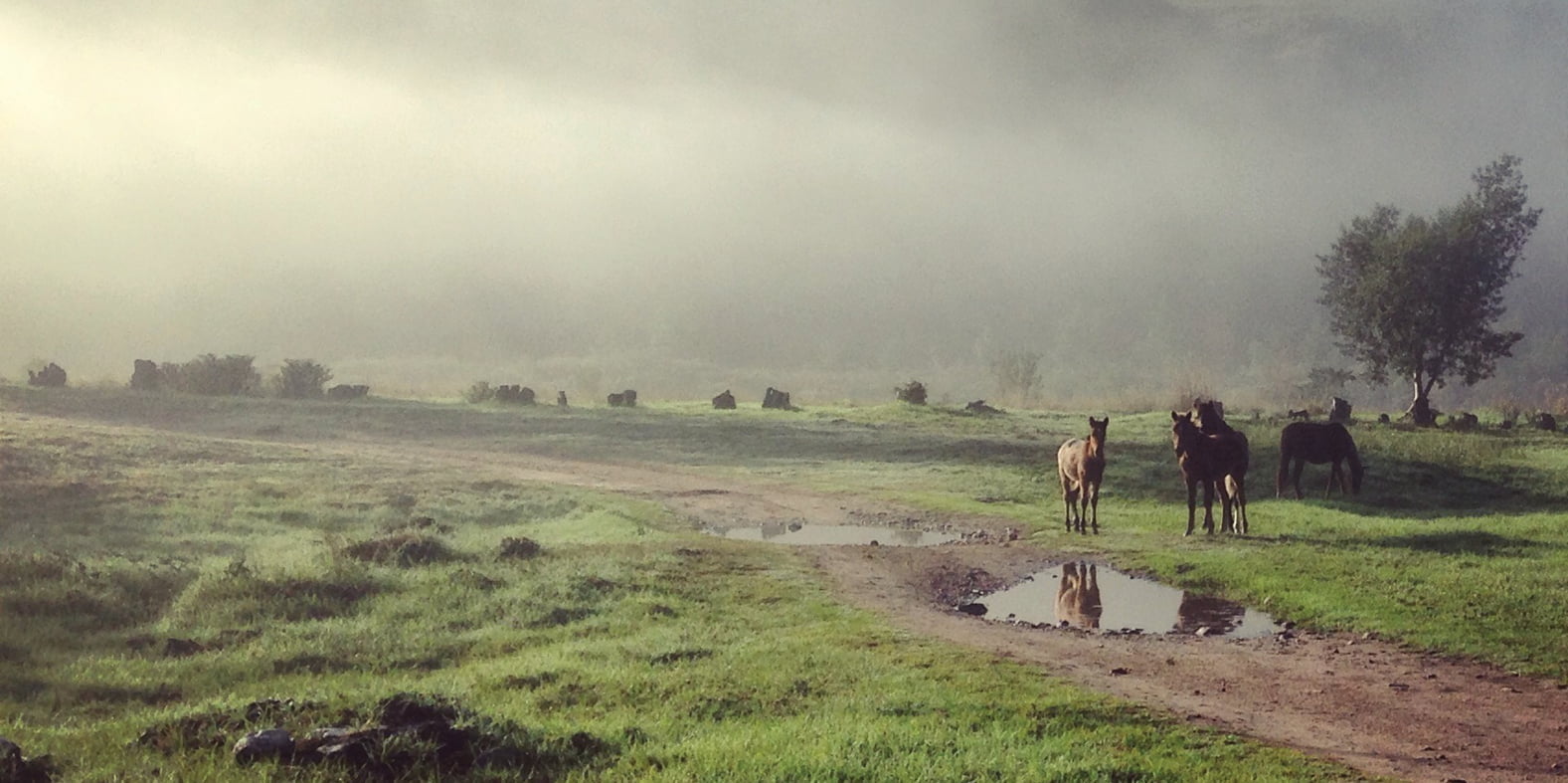
Come wander with us through the mists of time.
━ 300 years in 4 chapters
The valley's history is everyone's history.
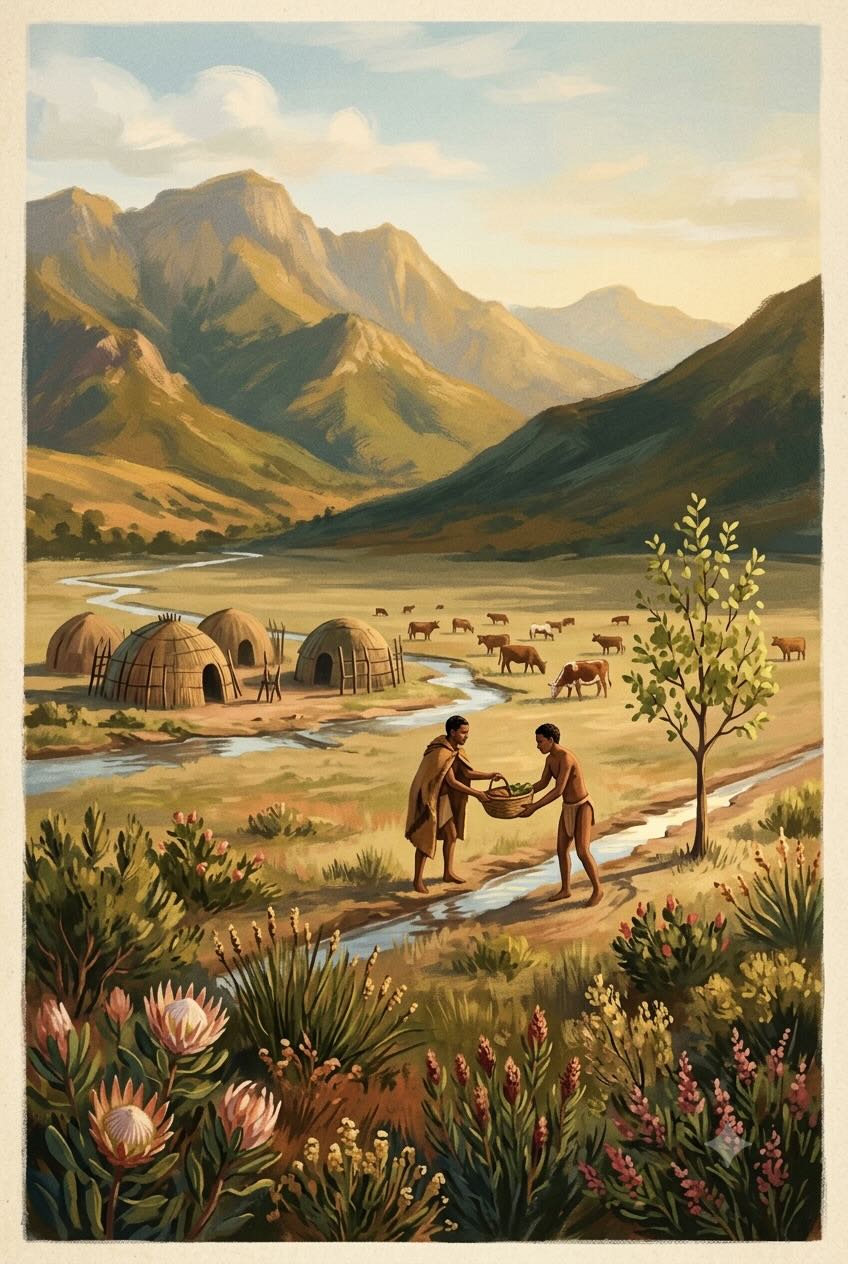
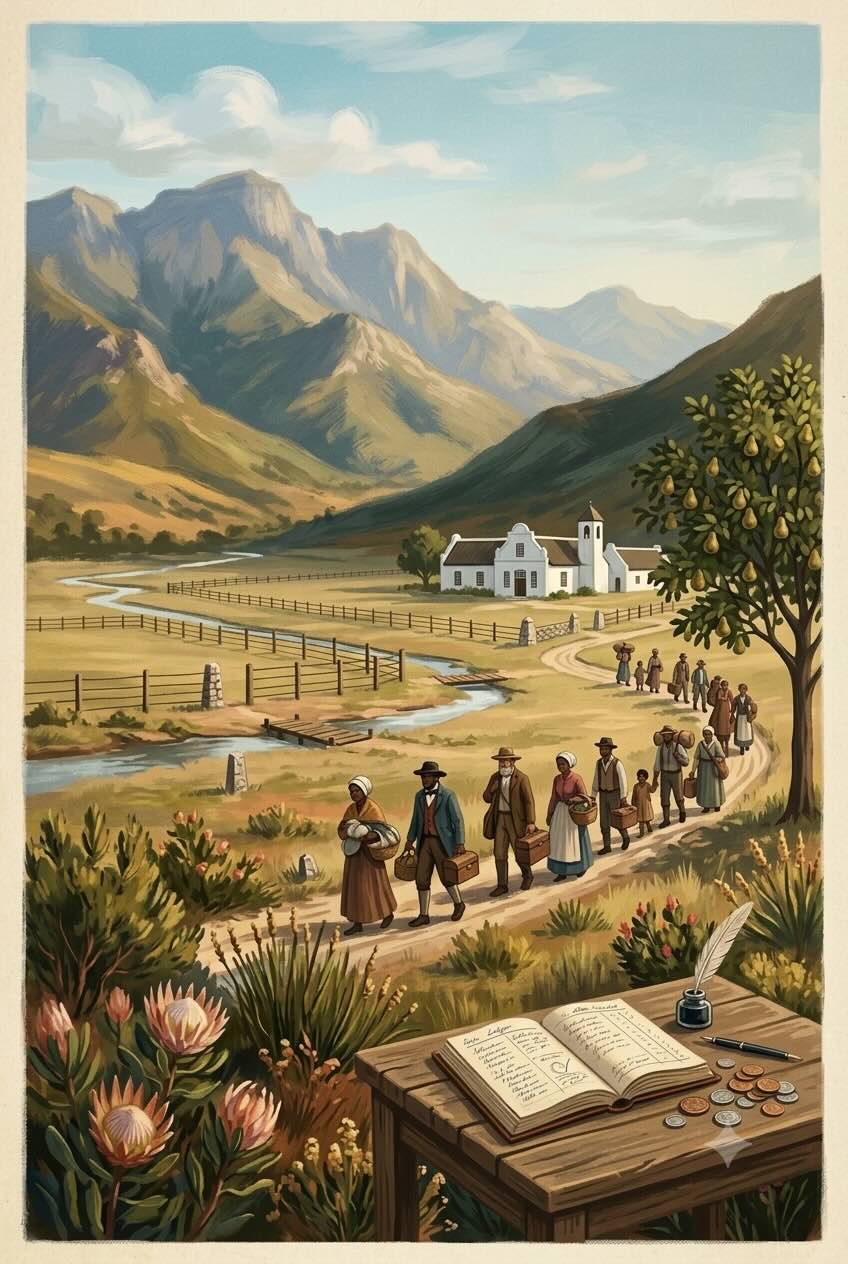
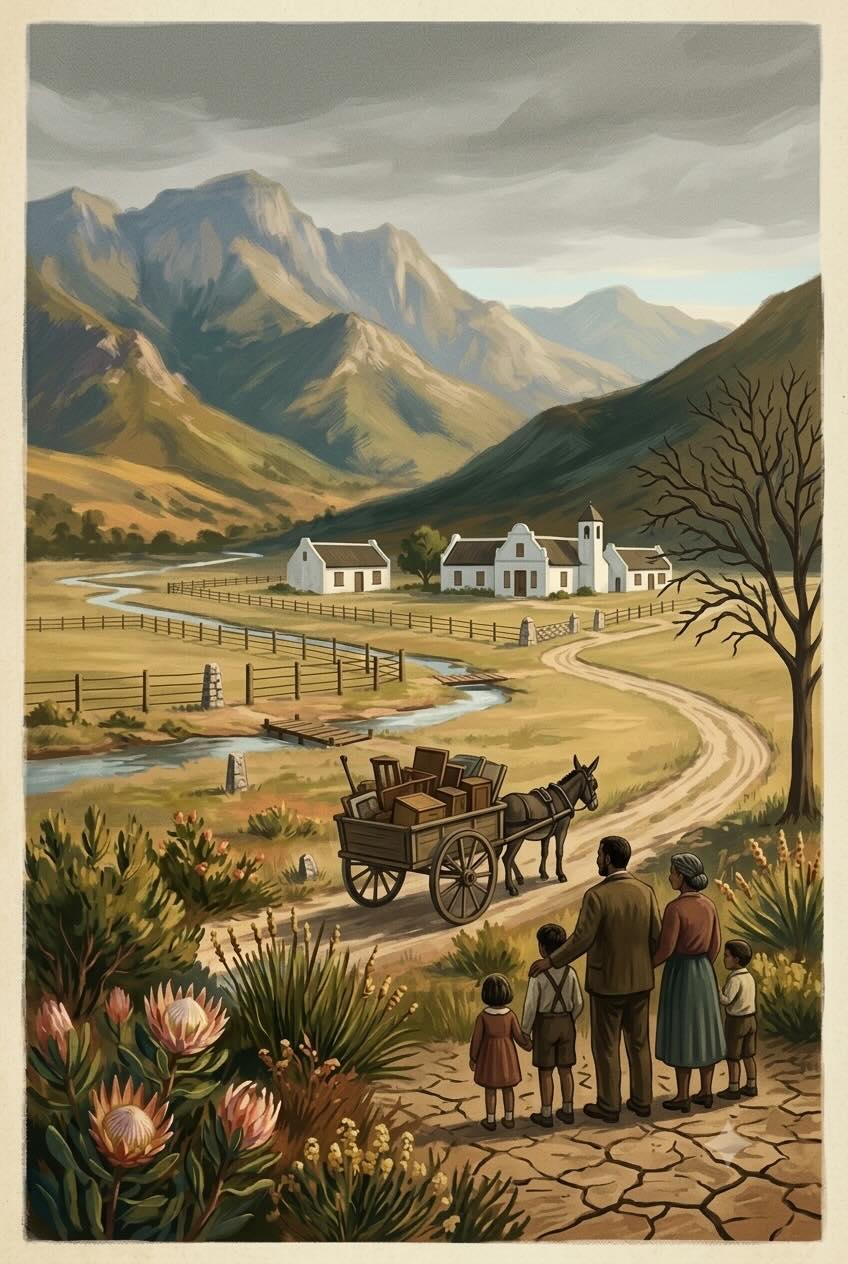
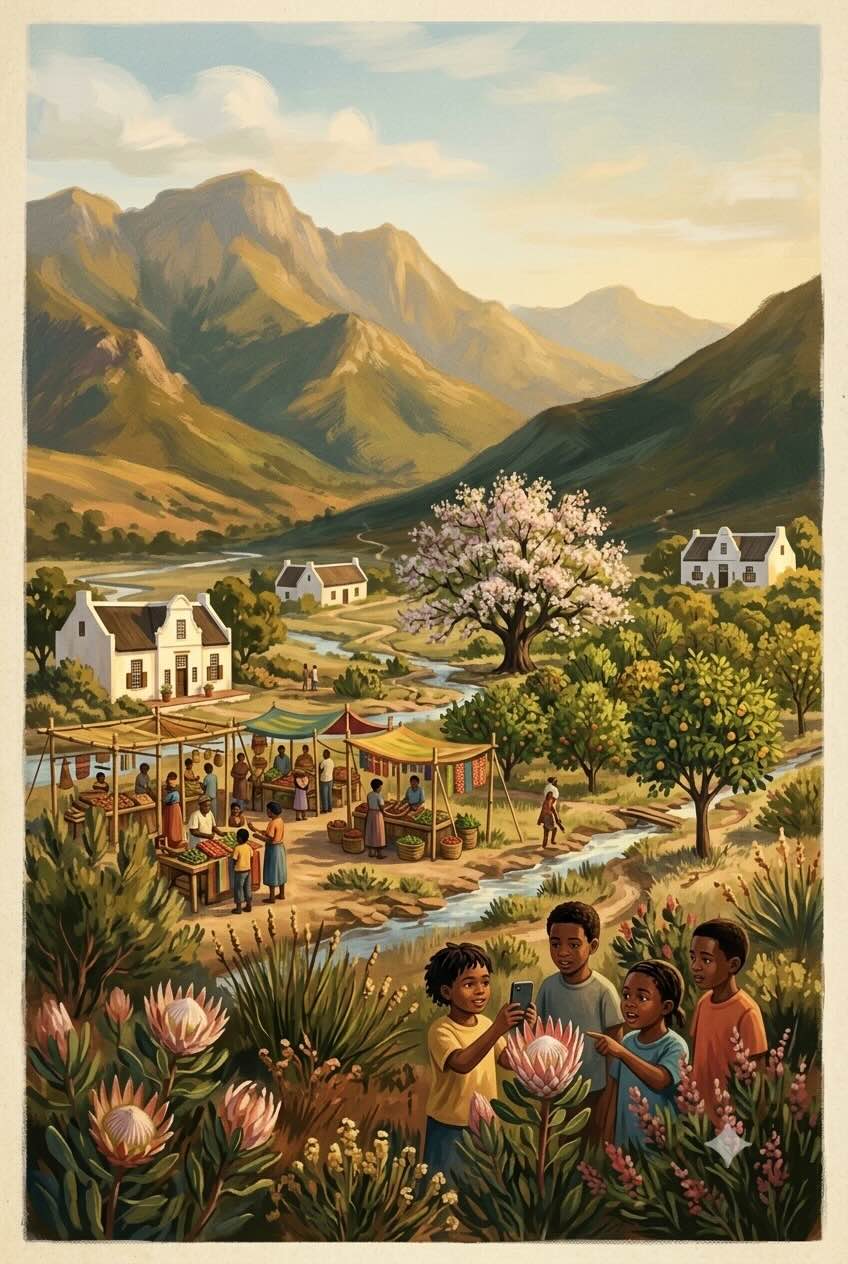
(The following placeholder images are AI-generated while a local artist completes a commission.)
The Gift
Chapter 1: pre-1737
Before money arrived, this valley knew only contribution. The Khoekhoe herders who lived here for two thousand years held their land in common; wealth was cattle, and cattle moved between families as obligation, celebration, and care. When Georg Schmidt arrived in 1738, he continued those traditions: a shared water furrow, gardens, lessons under a pear tree, and work exchanged for supplies. No coin changed hands for years. Much has changed, but the furrow still runs. You can walk beside it.
The Ledger
CHAPTER 2: EARLY 1800s
Then the institutions came, and with them a new way of keeping score. Land became freehold, water became property, labour became wages, and everything acquired a price and a debt attached to it. Even freedom was priced: when slavery ended in 1838, Britain paid compensation to the owners, but nothing to those who were freed. A thousand emancipated slaves walked to this valley, because it was the one place that still remembered another way of keeping score. Their descendants will greet you here.
The Reckoning
CHAPTER 3: LATE 1800s to TODAY
The market economy grew, and lifted some and priced out everyone else. This is the bitter part of our valley's history. Families were forced from their homes under the Group Areas Act. South Africa's first teachers' college, founded here in 1838, was forcibly closed. Eventually, land was promised back to the community, but it's still in limbo after decades. Now our municipality has run out of money. We don't hide this chapter because it's the reason the fourth chapter exists, and honesty is part of what visitors come here to experience.
The Return
Chapter 4: to 2038 & beyond
Something is emerging now, that doesn't quite fit in any of the earlier chapters. And it's happening all over the world. Here in our valley, farmers, teachers, church members, and concerned residents who never expected to agree on anything are building together. The valley has set herself a date: 2038, three hundred years after the first missionary arrived among those who already lived here. That story is being written now, and it's written for those with a yearning for something different.
━ valley of grace ethos
What we're known for.
01
Welcome Home, and we really mean it
Hospitality here is older than any of the heritage buildings. For almost three centuries this valley has taken in people who had nowhere else to go, and the tradition lives on. Guests are fed from local healthy produce, greeted by name, and given time. Nobody performs warmth solely for a tourist economy. Warmth in the hearts of local residents has always been there, and tourism came later. You'll feel the difference within an hour of arriving.
02
A past told whole
We tell our history warts and all: the dispossession, the removals, the promises broken and still unresolved. We do this because trust matters more than anything else, and integrity and honesty are the foundation. Some in this valley carry wounds that haven't healed, and forgiveness is theirs to give or withhold, on their own time. What we offer visitors is the unedited story. What we ask in return is that you embrace all of it.
03
Word kept, work done
Trust is cultivated slowly and destroyed in a moment, so this valley builds trust the unglamorous way: commitments honored, meetings held, evidence checked, credit given where it's due. The projects developing here (a food forest, a contribution and commitment market, a living map of the mountains) exist because neighbours who had every historical reason to distrust one another decided to do what they said they would do, and then did it again, and again, and again.
04
Room to be fully seen
The deepest level of trust is one where you can arrive with foibles and contradictions and remain safe. That's what the valley extends to its own people first, and then to those who visit. Come as a scholar, a skeptic, a seeker, or someone who simply needs quiet time in the mountains. Nobody here will ask you to pretend. It turns out that's what most people yearn for, and it's the thing they remember longest after they leave.
━ Kind Words
━ Visit Us
Everything you need before you Visit.
airport
Cape Town International Airport
is 90 minutes away.
Find Us
Take the N2 past Somerset West. Drive over Sir Lowry's Pass and continue all the way on the N2 until you turn left onto the R406 just before Caledon. The R406 then leads you into The Valley of Grace. First stop is Genadendal and the second stop is Greyton.
accommodation
what's there
The valley has a well-developed visitor infrastructure and can cater for most needs. Caledon is 35km away and Hermanus is 80km away for additional needs. The Hemel & Aarde Valley, just 50km away, is a wine-lover's paradise.
━ Ready when you are
Come and experience the transformation.
The Valley of Grace is a living brand owned by no one, benefiting everyone. Stewarded by the Ward 2 Business Forum, it covers both the destination and everything the land and her people produce. The valley sits within the Cape Floristic Kingdom, the smallest and richest of the world's six floral kingdoms, beneath mountains inscribed as part of the Cape Floral Region Protected Areas, a UNESCO World Heritage Site. Some 30,000 people call this place home.
A note on care and accountability: The story told on these pages belongs to the people of this valley, many of whom carry its most challenging chapters in living memory and in family history. The last thing I want to do is tell their story carelessly.
This website was prepared with close attention to the historical and legal record. Every claim has been checked against archives, court documents, published scholarship, and community sources, and where the record is uncertain, I have tried to say so rather than smooth it over.
I'm Michael Haupt, doula of The Valley of Grace. Although I wasn't born here, I've lived in this valley since 2013, and I'm raising a daughter here who traces her lineage to one of the families displaced from their homes in this valley. The fourth chapter of this story is the one I want her to grow up in, and while there may be challenges getting there, the community engagement work I've been involved in over more than a decade gives me hope.
Even with care, errors and omissions are possible, and they are mine alone. If anything on these pages is wrong, incomplete, or told in a way that causes hurt, I want to hear it directly, and I will fix it. WhatsApp me directly by tapping here.
© 2026 The Valley of Grace · Western Cape · South Africa
Privacy Policy · Terms · Business Forum